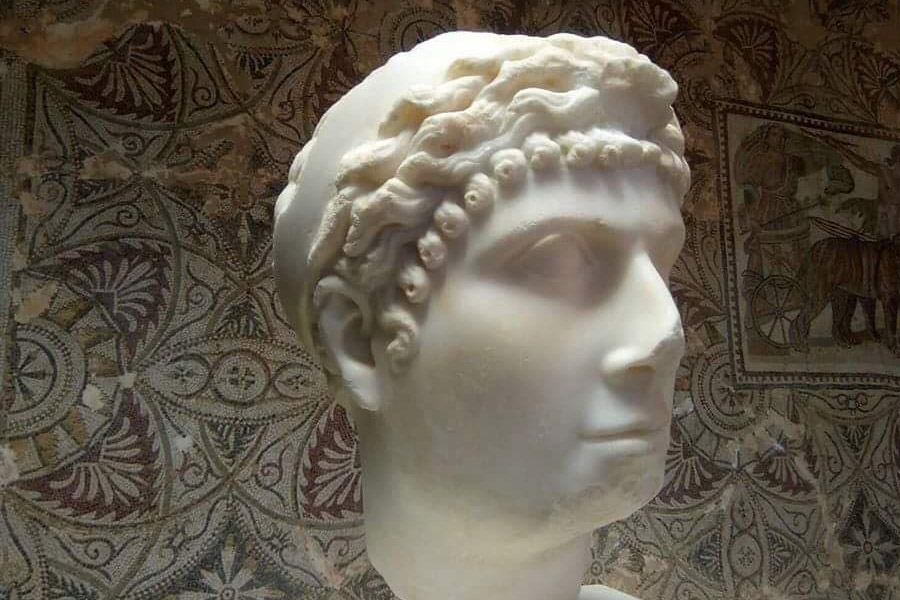
Basic Information
| Field | Details |
|---|---|
| Name | Drusilla Of Mauretania The Elder |
| Flourished | mid-1st century AD (c. 30s–50s) |
| Probable Birth | Late 30s AD, Caesarea Mauretaniae (modern Cherchell, Algeria) |
| Death | Unknown (alive after AD 54; no secure death date) |
| Status | Royal princess of the Mauretanian-Ptolemaic line |
| Claimed Ancestry | Descendant of Mark Antony and Cleopatra VII (often termed “granddaughter” in Roman accounts, likely great-granddaughter by modern chronology) |
| Likely Father | Ptolemy of Mauretania (r. c. AD 20–40), last client king of Mauretania |
| Possible Mother | Julia Urania (probable Emesene/Syrian noblewoman) |
| Spouse(s) | Marcus Antonius Felix (Roman procurator of Judaea); possibly later Sohaemus of Emesa (client king in Syria) |
| Issue | Uncertain; possibly Gaius Julius Alexion (Alexio II) if married to Sohaemus |
| Languages & Culture | Greco-Roman court culture with North African and Near Eastern ties |
| Places Associated | Mauretania, Rome, Judaea, Emesa (Syria) |
A Princess at the Crossroads of Empires
Drusilla Of Mauretania The Elder sits at the seam where African, Egyptian, and Roman destinies were stitched together. Born in the shadow of a kingdom’s twilight, she likely entered the world in the late 30s AD at Caesarea Mauretaniae, the glittering capital built by her forebears on the Algerian coast. Her childhood was framed by abrupt imperial realignments: in AD 40, King Ptolemy of Mauretania—probably her father—was executed in Rome, and Mauretania was annexed, reorganized, and forever changed. If her lineage made her a jewel of the old order, Rome made her a bond in new chains of alliance.
Roman writers describe the Drusilla who married the imperial procurator Marcus Antonius Felix as a “granddaughter” of Antony and Cleopatra. Chronology whispers a different cadence: more likely she was a great-granddaughter through Cleopatra Selene II and Juba II, with Ptolemy as her father. Either way, her blood carried echoes of Egypt’s last queen, Numidia’s scholar-king, and the Roman triumvir who nearly remade the world. It was precisely this sheen of ancestry that made her marriages—first to Felix, possibly later to Sohaemus of Emesa—more than personal unions. They were purposeful stitches in an ever-moving imperial tapestry.
By the early 50s AD, Drusilla was married to Felix, a powerful imperial freedman promoted under Claudius to govern Judaea. The match signaled the fusion of Roman administrative muscle and client-king prestige: a princess from a dissolved African throne joined to a man who wielded imperial authority in the restless eastern provinces. Felix’s marital history is famously tangled; by the mid-50s he was married to another Drusilla, the Herodian princess, and the earlier union with the Mauretanian Drusilla seems to have ended. From that moment, the historical trail grows faint. Some reconstructions place Drusilla in Emesa, wed to the priest-king Sohaemus, with a son named Gaius Julius Alexion; others prefer caution, treating this as possible rather than proven.
The portrait that emerges is less a single face than a mosaic of gleaming tesserae. Drusilla appears in glimpses—an honor-laden name, a marriage contract, a dynastic echo—and then slips back into court silence. Yet those fragments are telling. Her life illustrates how the Roman world recycled royal prestige: dethroned dynasties could still move the levers of power through marriage. She was not a reigning queen, but in some accounts the term “regina” hovers around her, a rank-signifier more than a formal title. It suits her well: a queen by blood, a consort by politics, and a hinge between empires.
Family Web: Ptolemaic Mauretania and the Emesene Thread
Beneath the political narrative lies a densely knotted family web—North African courtly brilliance interlaced with Syrian priest-kings and Roman governance.
- The Ptolemaic Line: Cleopatra VII and Mark Antony bequeathed their daughter Cleopatra Selene II to Mauretania, where she ruled alongside Juba II. Their son Ptolemy inherited the throne and, in many reconstructions, fathered Drusilla.
- The Mauretanian Court: Juba II was a polymath king who modeled his court on Roman and Hellenistic ideals, minting coinage, patronizing learning, and anchoring the royal house in Mediterranean prestige.
- The Emesene Link: If Drusilla later married Sohaemus of Emesa, her lineage would connect to the priestly dynasty of Syria—an arc that may lead to Alexion (Alexio II) and, in broader genealogical storytelling, toward later Syrian-Roman figures.
Kinship Snapshot
| Relation | Name | Role | Notes |
|---|---|---|---|
| Ancestor | Cleopatra VII Philopator | Last queen of Ptolemaic Egypt | Drusilla’s line traces to her through Cleopatra Selene II |
| Ancestor | Mark Antony | Roman triumvir | Cited as Drusilla’s ancestor; the “granddaughter” label follows |
| Grandmother (likely) | Cleopatra Selene II | Queen of Mauretania | Daughter of Antony & Cleopatra VII |
| Grandfather (likely) | Juba II | King of Mauretania | Scholar-king; husband to Cleopatra Selene II |
| Father (probable) | Ptolemy of Mauretania | Last client king of Mauretania | Executed c. AD 40; kingdom annexed |
| Mother (possible) | Julia Urania | Noblewoman of Emesa | Would explain later Syrian ties |
| Husband | Marcus Antonius Felix | Procurator of Judaea | Marriage arranged under Claudius; ended mid-50s |
| Possible Husband | Sohaemus of Emesa | Client king of Syria | Marriage debated; may link to Alexion |
| Possible Son | Gaius Julius Alexion | Emesene ruler (Alexio II) | Hypothetical descendant; not securely attested |
Timeline: Dates and Turning Points
-
- AD 30–40: Probable birth at Caesarea Mauretaniae; name “Drusilla” reflects Julio-Claudian fashion and courtly Romanization.
- AD 40: Ptolemy of Mauretania executed; Mauretania annexed into the Roman provincial system.
- Early–mid AD 50s: Drusilla married to Marcus Antonius Felix while he governs Judaea; her royal pedigree heightens the union’s political cachet.
-
- AD 54–56: Felix is documented with the Herodian Drusilla; the Mauretanian marriage appears to have concluded by this period.
- Mid–late AD 50s (possible): Drusilla marries Sohaemus of Emesa; potential issue includes Gaius Julius Alexion.
- After AD 54: Drusilla is known to have been alive; subsequent movements and death date remain unknown.
Names, Titles, and Identity
Drusilla carried a name fashionable in the imperial orbit, echoing the prestige of the Julio-Claudian court. Roman writers sometimes cloak her in “regina”—queen—not necessarily as a reigning title but as a badge of status befitting a woman born into dynastic privilege and married to men of public authority. She should not be confused with the Herodian Drusilla, daughter of Agrippa I; both bear the same name and appear in the same decades, a twin mirage that often confounds casual readers. The Mauretanian Drusilla’s hallmark is her Ptolemaic bloodline and the probable link to Ptolemy of Mauretania.
Power, Prestige, and the Mauretanian Legacy
Even without a formal throne, Drusilla functioned as a quietly influential node in Rome’s network of client elites. Her marriage to Felix combined imperial bureaucracy with displaced royal legitimacy, smoothing the gears of governance in Judaea. If she later stood beside Sohaemus, the connection would have deepened Rome’s embrace of Syria’s priest-kings, stitching Cleopatra’s distant legacy into the cultural weave of Emesa. In a world that prized ancestry as a currency, Drusilla’s lineage was gold: minted in Alexandria, refined in Caesarea Mauretaniae, and spent in the eastern markets of imperial politics.
Beneath these alliances lies a familiar ancient story: dynasties outlast their capitals. While Mauretania’s royal house was dismantled by annexation, its daughters and granddaughters continued to matter—quietly, strategically, beautifully. Drusilla’s life, glimpsed through the narrow keyhole of surviving records, shows how royalty reconfigured itself in Rome’s age: not always as sovereigns, but as consorts, connectors, and living symbols of continuity.
FAQ
Who was Drusilla Of Mauretania The Elder?
A Mauretanian-Ptolemaic princess of the mid-1st century AD, remembered for her prestigious ancestry and politically significant marriages.
Was she really a descendant of Antony and Cleopatra?
Yes; Roman accounts call her a “granddaughter,” though strict chronology suggests she was more likely a great-granddaughter via Cleopatra Selene II.
Who were her parents?
The most likely father is Ptolemy of Mauretania; her mother is often proposed as Julia Urania, though this remains debated.
Whom did she marry?
She was married to Marcus Antonius Felix, procurator of Judaea, and may later have married Sohaemus of Emesa.
Did she have children?
Her issue is uncertain; if the Emesene marriage occurred, a possible son is Gaius Julius Alexion.
Is she the same person as the Herodian Drusilla?
No; they are different women with the same name who lived contemporaneously, which commonly causes confusion.
What title did she hold?
She is sometimes styled “regina” in later phrasing, signaling high rank rather than formal sovereignty.
Where did she live?
She is associated with Mauretania, Rome, Judaea, and possibly Emesa, reflecting her dynastic and marital ties.
When did she die?
Her exact death date is unknown; she is recorded as alive after AD 54.
Why does she matter?
Drusilla embodies how displaced royal houses shaped Roman provincial politics through marriage, ancestry, and enduring prestige.