Basic Information
| Field | Details |
|---|---|
| Full Name | Eldy Banda |
| Birth Date | Circa March 22, 1940 |
| Birthplace | Lima, Peru |
| Heritage | Quechua Indigenous |
| Immigration to U.S. | Mid-1950s (age 14), settled in San Francisco |
| Primary Roles | Nurse, activist, cultural advocate, later film contributor |
| Spouse | Peter Bratt Sr. (married around December 30, 1960) |
| Children | Five, including Benjamin Bratt (b. December 16, 1963) and Peter Bratt Jr. |
| Grandchildren | Sophia Rosalinda Bratt (b. December 6, 2002); Mateo Bravery Bratt (b. October 3, 2005) |
| Landmark Participation | 1969 Alcatraz occupation (American Indian Movement) |
| Recognitions | Emmy (contributions to American Family), Cine Golden Eagle (The Last Conquistador, 2008) |
| Recent Status | Widely discussed in 2025 retrospectives; death date unconfirmed |
Roots and Migration: Lima to San Francisco
Born around March 22, 1940, in Lima, Peru, Eldy Banda was a daughter of Quechua heritage and a household where music and memory braided the days. At age 14, she immigrated to the United States in the mid-1950s, arriving in San Francisco—a city of fog and new beginnings. The move demanded resilience. She learned to navigate language barriers, cultural dislocation, and the quiet weight of expectation, all while safeguarding the traditions that shaped her identity. The blend of indigenous pride and immigrant grit became her compass, guiding a life marked by care, courage, and service.
By roughly December 30, 1960, Eldy married Peter Bratt Sr., a German-American sheet metal worker. Their union at the cusp of a new decade was both anchor and wind: firm roots to raise five children, and a shared belief that dignity and justice should be daily bread. In their San Francisco home, cultural pride wasn’t a motto—it was practice, stitched into the meals, stories, ceremonies, and community gatherings that formed the family’s rhythm.
Activism in Action: Alcatraz 1969 and Beyond
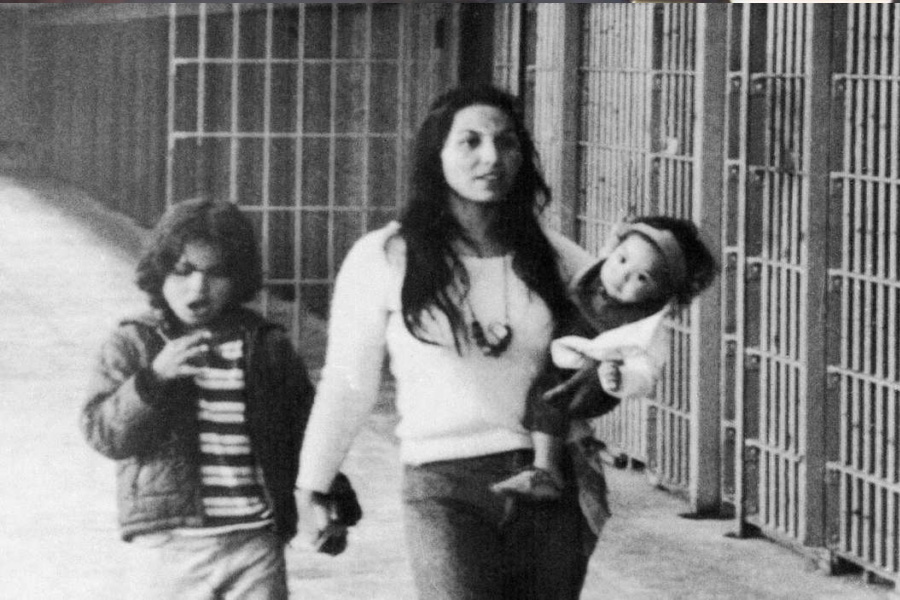
In 1969, Eldy Banda brought her children to the occupation of Alcatraz, one of the era’s defining acts of Native American resistance. The protest lasted 19 months; even brief visits had lasting impact. Eldy’s choice was deliberate: to show her children justice at eye level, not from the distance of newsprint. Among them was a five-year-old boy—Benjamin—who would one day speak of that moment as a spark that lit his lifelong commitment to representation and advocacy.
Her activism didn’t begin or end on the island. It threaded through community work, cultural preservation, and the steady insistence that indigenous stories deserved the microphone. She balanced this with her nursing career, turning empathy into action both at the bedside and in the public square.
Nursing as Calling: Compassion in Practice
Eldy’s nursing was not a uniform or title—it was a vocation. She trained in the United States and became a nurse known for presence as much as skill. Patients recall the softness of her voice and the decisiveness of her hands. She understood that healing unfolds in layers: clinical precision, cultural respect, and the assurance that someone truly sees you. In the 1990s, her career peaked amid busy hospitals and community clinics, where she advocated for equitable care and dignity in treatment.
Nursing also stabilized her household. It funded music lessons and after-school snacks, supported activism travel, and taught her children daily discipline—showing up, doing the work, caring for others—even when the world looked away.
A Creative Turn: Film and Storytelling
Later, Eldy stepped into film and creative projects, reflecting the family’s growing footprint in storytelling. She contributed to productions connected to her sons’ work—intersections of artistry and advocacy shaped by personal history. In 1996, the family orbit included the award-winning Follow Me Home, a project emblematic of their approach to social themes and identity. She also contributed to American Family, a television series that spotlighted complex, underrepresented narratives, earning recognition such as an Emmy for her involvement. In 2008, her contributions were further honored with a Cine Golden Eagle for The Last Conquistador.
These creative chapters weren’t a departure from nursing or activism. They were another language for the same mission—broader reach, deeper resonance. Cinema offered a way to turn personal story into public conversation, to make memory visible.
Family and Relationships: A Household of Purpose
The Banda–Bratt home in San Francisco was a workshop of identity. Eldy and Peter Sr. raised five children with an emphasis on heritage, mutual support, and civic responsibility. Their children—Benjamin, Peter Jr., and three who keep a private profile—grew up immersed in culture and advocacy. Benjamin Bratt (born December 16, 1963), known for work in television and films such as Traffic and Blood In Blood Out, would often cite his mother’s example as foundational to his choices on and off screen. Peter Bratt Jr. found his path in filmmaking, writing, and directing, contributing to projects that tell stories with grit and heart.
The next generation carries the same quiet strength. Eldy’s grandchildren, Sophia Rosalinda (born December 6, 2002) and Mateo Bravery (born October 3, 2005), inherit a legacy of art and activism, even as they maintain privacy. In their names—Rosalinda and Bravery—are notes of beauty and courage, echoing the values their grandmother lived.
Timeline Highlights
| Year | Milestone | Notes |
|---|---|---|
| 1940 | Birth | Lima, Peru; Quechua heritage |
| Mid-1950s | Immigration | Moved to San Francisco at age 14 |
| ~1960 | Marriage | Wed Peter Bratt Sr. around December 30 |
| 1963 | Family | Birth of son Benjamin (Dec 16) |
| 1969 | Activism | Participation in Alcatraz occupation |
| 1990s | Career Peak | Nursing work in U.S. hospitals and community settings |
| 1996 | Film | Contributed around the family’s project Follow Me Home |
| 2002 | Grandchild | Sophia Rosalinda Bratt born (Dec 6) |
| 2005 | Grandchild | Mateo Bravery Bratt born (Oct 3) |
| 2008 | Recognition | Cine Golden Eagle for The Last Conquistador |
| 2025 | Retrospectives | Legacy widely profiled; passing unverified |
Family Snapshot
| Name | Relation | Details |
|---|---|---|
| Peter Bratt Sr. | Spouse | German-American sheet metal worker; married around Dec 30, 1960 |
| Benjamin Bratt | Son | Actor; born Dec 16, 1963; married to Talisa Soto |
| Peter Bratt Jr. | Son | Filmmaker, writer, director |
| Child 3 | Child | Private |
| Child 4 | Child | Private |
| Child 5 | Child | Private |
| Sophia Rosalinda Bratt | Granddaughter | Born Dec 6, 2002 |
| Mateo Bravery Bratt | Grandson | Born Oct 3, 2005 |
Legacy and Influence
Eldy Banda’s life unfolds as a braid—family, care, and resistance woven into a single strand. She proved that activism can be a kitchen-table conversation and a front-line act. She showed that nursing, taken seriously, is both science and solidarity. She demonstrated that storytelling is not entertainment alone—it is remembrance, a way to honor the people history forgets.
Her influence reverberates through her children’s careers and her community’s memory. Even as 2025 coverage frames her story in the language of legacy, her presence remains palpable in the work her family continues. Whether on the hospital floor, at Alcatraz, or in a film edit suite, Eldy’s message is the same: protect the vulnerable, speak truth, carry culture forward.
FAQ
Is Eldy Banda’s death confirmed?
No; recent retrospectives discuss her legacy, but no verified death date is publicly confirmed.
What is Eldy Banda’s heritage?
She is of Quechua Indigenous heritage from Lima, Peru.
How many children does Eldy Banda have?
She has five children, including actor Benjamin Bratt and filmmaker Peter Bratt Jr.
Did Eldy participate in the 1969 Alcatraz occupation?
Yes; she brought her children to witness and engage with the protest, shaping their perspectives on social justice.
What was her profession?
She worked as a nurse, known for compassionate care and community commitment.
Did Eldy Banda work in film and television?
Yes; she contributed to creative projects, including involvement around Follow Me Home and American Family, and was recognized with awards.
When did Eldy immigrate to the United States?
She moved in the mid-1950s at age 14, settling in San Francisco.
Who is Eldy Banda’s spouse?
She married Peter Bratt Sr., a German-American sheet metal worker, around December 30, 1960.
Benefits Of Professional Door Installation
Benefits Of Obtaining An Online Pmhnp Degree
The Fastest Way To Get A Fair Offer For Your Mobile Home
Complete Guide To 24 7 Emergency Plumbing Services In Grand Rapids
Best Salon Scheduling Software 11 Booking Systems Compared For Salons And Spas